
EMDR therapy in Denver
EMDR is one of the most researched trauma treatments there is, and it can reach the places where understanding your patterns hasn't been enough to change them. This is what it is, how it works, and how I use it for complex, relational trauma.
When you understand why, and it still hasn't changed
A lot of people come to EMDR after they've already done the work of understanding. You can name what happened, you can see the pattern, and yet the old reaction still fires, the same feeling still floods in, your body still braces as though the thing were happening now. That gap between knowing and feeling isn't a personal failing or a sign you didn't try hard enough. It's how trauma is stored. EMDR works at the level where the memory actually lives, which is why it can move things that insight alone has circled for years.
What EMDR is
EMDR stands for Eye Movement Desensitization and Reprocessing. Behind the long name is a fairly straightforward idea about how the mind heals. Most of what happens to us gets processed and filed away as an ordinary memory: something that happened, in the past, that you can recall without reliving. When an experience is overwhelming, that filing sometimes doesn't finish. The memory stays stored in a raw form, still carrying the images, body sensations, and beliefs it held at the moment it happened. That's why a present-day reminder can set off an old alarm as though no time has passed.
EMDR helps the brain finish the processing that got interrupted. During a session, you bring a piece of a memory to mind while following a gentle back-and-forth: your eyes tracking my hand or a moving light, or soft alternating taps or tones. This bilateral stimulation seems to free up the brain's own capacity to reprocess, a little like what happens in REM sleep, when the mind sorts through the day. As that happens, the memory tends to settle. It becomes something that happened to you rather than something that keeps happening to you, and the charge it carried begins to loosen.
One thing that surprises people: you don't have to narrate everything in detail for EMDR to work. It reaches the stored memory and your body's response to it, not the retelling, so you stay in control of how much you say out loud.
What the work actually looks like
EMDR is more structured than open-ended talk therapy, and that structure is part of what keeps it safe. We don't begin by opening the hardest memory. We start by getting to know your history and what you want to be different, and by building the internal resources you'll draw on, so your nervous system has somewhere steady to return to. Only once that groundwork is in place do we begin reprocessing, and we move through targets in an order your system can actually tolerate.
A reprocessing session tends to have its own arc: settling in, turning toward the memory, letting it move and shift through the bilateral stimulation, and then coming all the way back to the present before we close. You stay oriented and aware the whole time. I'm tracking with you throughout, and nothing happens that you haven't agreed to. If something feels like too much, we have ways to slow it down or return to steadier ground, and doing that is a normal part of the process rather than a sign it isn't working.
EMDR for complex and relational trauma
Much of the research on EMDR looks at single-incident trauma: a car accident, an assault, one terrible day. A lot of what I treat is different. It's trauma that built up over years, usually inside relationships, often starting in childhood. For this kind of complex trauma, how EMDR is paced and held matters as much as the method itself.
So I rarely use EMDR on its own. I combine it with Internal Family Systems (IFS), or parts work, which gives the protective parts of you a genuine say in what we approach and when. The part that stays vigilant, the part that numbs out, the part that keeps everyone else comfortable: these developed for good reasons, and in this work they're consulted rather than overruled. For people whose inner protectors have been overruled their whole lives, being asked first is itself part of the repair. It also means the processing tends to go better, because we're not dragging any part of you somewhere it hasn't agreed to go.
If you want the fuller picture of how I work with complex trauma, the trauma therapy page goes into it, and there's a dedicated page on complex PTSD if that's the language that fits your experience.
Weekly sessions, or a focused intensive
Most people do EMDR as part of ongoing weekly therapy, where the reprocessing unfolds alongside everything else we're working on. That works well, and it's how most EMDR is done.
For some people, especially when there's one well-defined piece of stuck work, a weekly hour can feel like it keeps pausing mid-arc and picking the thread back up a week later. If that's you, an EMDR intensive offers a different container: extended, unhurried processing with real rest built in, so a single piece of work can run start to finish in one sitting. Some people are already in weekly therapy they value and come to me just for a focused intensive block. We'd figure out the right format together in a free consultation, and there's nothing you need to sort out on your own before you reach out.
If your trauma is tied to who you are
For many queer and trans people, the wounds we carry are woven together with identity: family that pulled away, years of masking, communities that had no room. EMDR doesn't ask you to separate those threads, and you won't spend sessions explaining or defending who you are before the real work can begin. I've written more about that intersection on the queer and trans trauma therapy page, and you should know it's a particular focus of this practice.
The research behind EMDR
A short, honest note for anyone who likes to know the evidence:
EMDR is an established, first-line trauma treatment. It's recommended for PTSD by the WHO and named a first-line trauma-focused therapy by the VA and Department of Defense, supported by a large body of randomized controlled trials. (VA/DoD Clinical Practice Guideline for PTSD, 2023; WHO, 2013; NICE NG116, 2018.)
You don't have to retell everything for it to help. EMDR works on the stored memory and the body's response to it, which is part of why many people find it more tolerable than approaches that rely on narrating the details.
Its use for complex and childhood trauma is active, promising research. For trauma built up over years, the evidence is encouraging and still maturing, and the field keeps refining how EMDR is paced and structured for these presentations. (de Jongh et al., 2024.)
I'm glad to point you to any of these in a consult.
Therapist note
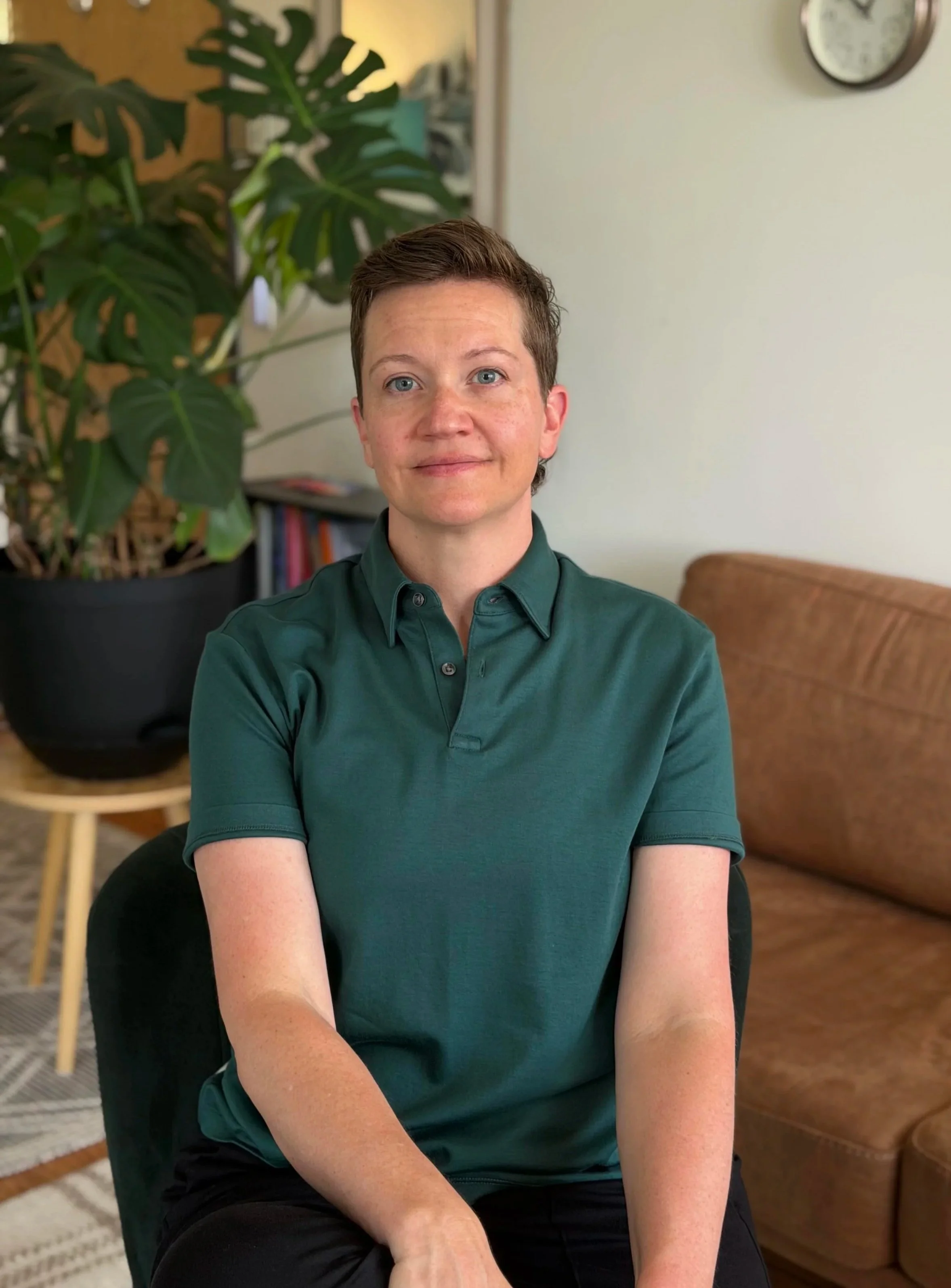
I'm Alex (they/them), a Licensed Professional Counselor in Denver. I trained in EMDR because the people I most wanted to help, folks carrying complex, relational trauma, so often arrived having already tried hard to think their way out of it. EMDR can reach places that talking alone sometimes can't. I use it carefully, at a pace your system can genuinely say yes to, and always alongside the trust we build first.
If understanding hasn't been enough to change it, EMDR might reach further
A free consultation is the first step. There are no forms or commitments, just a conversation to see whether this is a good fit for what you're carrying.
FAQ
-
It stands for Eye Movement Desensitization and Reprocessing. The eye movements are the best-known form of the bilateral stimulation EMDR uses, but they aren't the only one. Gentle alternating taps or tones work just as well, and we'll use whatever feels right for you, including over telehealth.
-
No. EMDR works on the stored memory and your body's response to it rather than on retelling the details, so you stay in control of how much you put into words.
-
Yes. It's recommended for PTSD by the WHO and named a first-line treatment by the VA and Department of Defense, with a large base of clinical trials. Its use for complex, long-term trauma is a newer and encouraging area of research. I'm glad to share studies in a consult.
-
The method is built to prevent that. We spend real time on preparation and resourcing first, we only reprocess with your agreement, and I combine EMDR with parts work so the protective parts of you help decide what we approach and when. If something feels like too much in a session, we have ways to slow down or step back.
-
It depends on what we're working with. A single, contained memory can move relatively quickly. Complex trauma built up over years is a longer arc, with meaningful shifts along the way rather than one finish line. Some people concentrate a piece of the work into an EMDR intensive. We'll talk honestly about what your goals actually need in the consult.
-
Yes. EMDR works well over telehealth, and I see clients online anywhere in Colorado, or in person at my Denver office near Cherry Creek, Capitol Hill, and Washington Park. You'll need to be located in Colorado for us to work together.