
Complex PTSD Therapy in Denver
If you've found your way to the term CPTSD and it finally made your experiences make sense, you're in the right place. This is the work my practice is built around.
You read the description and recognized yourself.
For a lot of people, finding the words "complex PTSD" is a turning point. Years of anxiety, depression, difficult relationships, and a harsh inner voice suddenly have a shape and a cause. There's relief in that, and often some grief too, because a name means it was real. What I want you to know is that the recognition is only the beginning of what's possible. CPTSD is treatable, the treatments are specific, and you don't have to figure out the path on your own.
What complex PTSD actually is
PTSD, as most people picture it, comes from a discrete event: an accident, an assault, a disaster. The nervous system takes an injury it can point to. Complex PTSD comes from trauma that was repeated or prolonged, usually relational, and often beginning in childhood: growing up with a frightening or unpredictable caregiver, chronic emotional neglect, abuse that had no clear end, or years of never being safe enough to be fully yourself.
The World Health Organization formally recognized CPTSD in the ICD-11, and the definition matches what many people live with. It includes the core PTSD picture, and adds three more layers:
Emotions that are hard to regulate. Feelings arrive fast, big, and hard to come down from, or they've gone quiet and far away.
A deeply negative sense of self. A persistent feeling of being worthless, damaged, or fundamentally different from other people, often with shame at the center.
Trouble in relationships. Difficulty trusting, staying close, or feeling safe with people, even the ones you love.
If you've been told you have anxiety, depression, or "attachment issues" and the treatments never quite reached the bottom of it, this is often why. Those can all be true, and still be downstream of the same underlying injury.
A note on the diagnosis itself, because people ask: the DSM-5, which US clinicians and insurers work from, doesn't yet include CPTSD as its own diagnosis, so your chart may say PTSD or something else even when complex trauma is the truer description. That's a limitation of the manual, and it doesn't change the treatment or make what you're carrying less real.
How it tends to show up in a life
Complex trauma is easy to miss because it can look like personality. It often shows up as:
Relationships that feel intense, confusing, or hard to sustain, with a pull toward familiar dynamics you can see but can't seem to step out of
People-pleasing and over-functioning, the fawn response, keeping everyone else regulated at your own expense
An inner critic that sounds suspiciously like someone from your past
Emotional flashbacks: sudden waves of shame, dread, or smallness that flood the present without an obvious picture or memory attached
Numbing, disconnection, or watching your life from a slight distance
A quiet, persistent belief that you're too much, or not enough
You may also relate to none of the dramatic imagery around trauma. Many people with CPTSD say "my childhood wasn't that bad." When the injury is chronic and relational, it rarely looks dramatic from the outside. It looks more like a child who adapted, and an adult who is tired.
How CPTSD treatment actually works
Complex trauma responds best to treatment built for it. Insight alone usually isn't enough, because the injury is held in the body and nervous system as much as in the mind. My primary tools are EMDR and Internal Family Systems (IFS), paced for complex presentations.
EMDR helps the nervous system finish processing memories that were stored without resolution, so old alarms stop firing in the present. It's one of the most thoroughly researched trauma treatments available, and you don't have to narrate everything that happened in detail for it to work. For CPTSD specifically, the pacing matters: we don't rush to the hardest material. We build stability and resources first, and we work through targets in an order your system can actually tolerate.
IFS (parts work) is how we make that pacing real. The protective parts of you that developed early, the critic, the pleaser, the one that numbs out, get a genuine say in what we approach and when. For people whose protectors have been overruled their whole lives, being consulted is itself part of the repair.
Some people do this work weekly. Some, especially those with one well-defined piece of stuck work, choose an EMDR intensive, a concentrated format that holds roughly three months of weekly therapy in one arc. We'd figure out the right shape together in a free consultation.
When identity is part of the story
For many queer and trans people, complex trauma and identity arrived tangled together: family that pulled away, years of masking, faiths and communities that had no room. If that's your experience, I've written more about it on the queer and trans trauma therapy page, and you should know it's a particular focus of this practice. You won't spend your sessions explaining yourself before the real work can start.
The research behind this work
A short note for anyone who likes to know the evidence:
CPTSD is a formally recognized diagnosis. The WHO's ICD-11 defines complex PTSD as the core PTSD symptoms plus disturbances in self-organization: emotion dysregulation, negative self-concept, and relational difficulty. The framework grew out of decades of clinical work with survivors of prolonged, repeated trauma. (WHO, ICD-11, 2019/2022; Herman, 1992; Cloitre et al., 2018.)
EMDR is an established, recommended trauma treatment. Endorsed for PTSD by the WHO and named a first-line trauma-focused therapy by the VA and Department of Defense, with a substantial base of randomized controlled trials. (VA/DoD Clinical Practice Guideline for PTSD, 2023; WHO, 2013; NICE NG116, 2018.)
Its use for childhood and complex trauma is active, promising research. For trauma built up over years, the evidence is promising and still maturing, and the field continues to refine EMDR for these presentations. (de Jongh et al., 2024.)
I'm glad to point you to any of these in a consult.
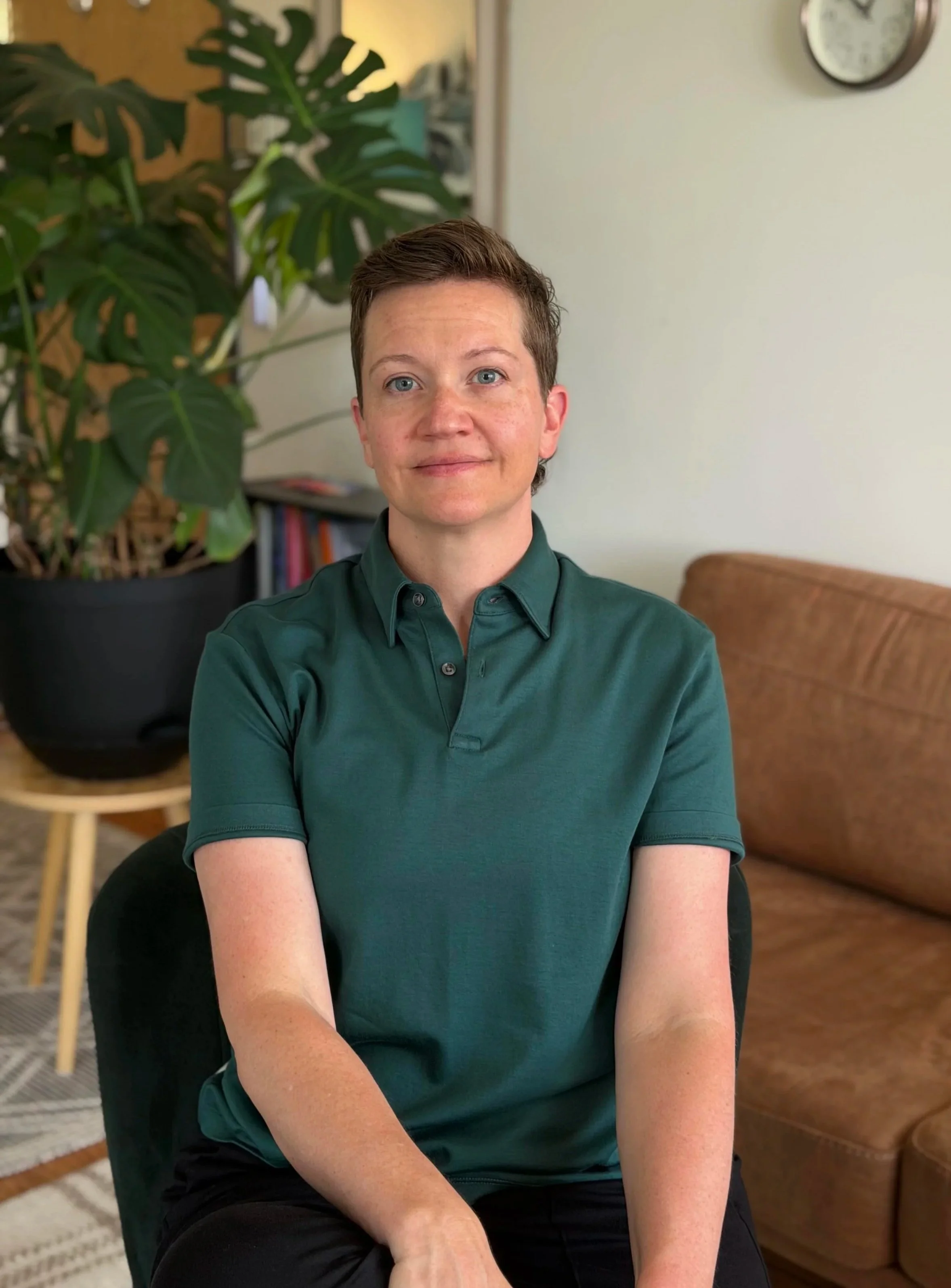
Therapist note
I'm Alex (they/them), a Licensed Professional Counselor in Denver. Complex, relational trauma is the center of my practice rather than one item on a list, and I came to this specialty the way many of us do, through my own healing. I know how much courage it takes to reach out when trusting people is precisely the thing that got injured. We'll go at a pace your system can genuinely say yes to.
You’ve carried this a long time. You don’t have to sort it out on your own.
A free consultation is the first step. There are no forms or commitments, just a conversation to see if we're a good fit.
Looking for community or peer support right now, outside a therapy room?
FAQs
What's the difference between PTSD and complex PTSD?
1
PTSD typically follows a discrete event and centers on re-experiencing, avoidance, and a nervous system stuck on alert. Complex PTSD includes those symptoms and adds three more layers that come from prolonged, usually relational trauma: emotions that are hard to regulate, a deeply negative sense of self, and difficulty feeling safe in relationships. The treatment overlaps but the pacing and the relational repair matter more in complex work.
Can CPTSD actually be treated, or do I just manage it?
2
It can be treated. The protective patterns and the stored memories that drive them can genuinely change; this isn't only symptom management. Recovery tends to be gradual and layered rather than a single breakthrough, and the research on trauma-focused treatment for complex presentations is encouraging and growing.
Do I need a diagnosis before reaching out?
3
No. Plenty of people come in with a strong sense that the description fits and no formal assessment. Part of our early work is a careful, collaborative look at what's actually going on, using measures where they help.
How long does this work take?
4
Complex trauma work is usually a longer arc than single-incident work, and there are meaningful shifts along the way rather than one finish line. Some people also use an EMDR intensive to concentrate a piece of the work. We'll talk about what your goals actually need in the consult.
In person at my Denver office (near Cherry Creek, Capitol Hill, and Washington Park) or online anywhere in Colorado.